

IT Support for Law Firms Chicago: Why One Security Slip Costs More Than Your Malpractice Insurance
Your malpractice policy caps out at $1 million. A single ransomware attack? That can run you three times that amount: plus the clients you'll never get back.
Here's what most Chicago law firms don't realize until it's too late: IT security incidents don't just cost money. They cost court deadlines, client trust, and sometimes your entire practice. While you're protected against legal malpractice, nobody's covering the $300,000 recovery bill when hackers lock up your case files three days before trial.
The truth? One security slip can do more damage than a decade of malpractice claims combined.
Why Law Firms Are Cybercriminals' Favorite Target
You handle divorce settlements, patent filings, merger documents, and criminal defense records. Hackers know this. They also know you're working on tight deadlines with judges who don't care that your server's encrypted. Miss that filing deadline because your systems are down? That's on you, not the cybercriminals.
Chicago law firms face a perfect storm of vulnerabilities:
Hybrid work environments where partners work from home on unsecured WiFi
Sensitive client data that's worth exponentially more on the dark web than medical records
Court deadlines that create leverage for ransom demands (pay up or miss your motion)
Multiple access points from paralegals to contract attorneys to expert witnesses
Aging systems that haven't been updated because "if it ain't broke..."
Spoiler alert: it's already broke. You just don't know it yet.
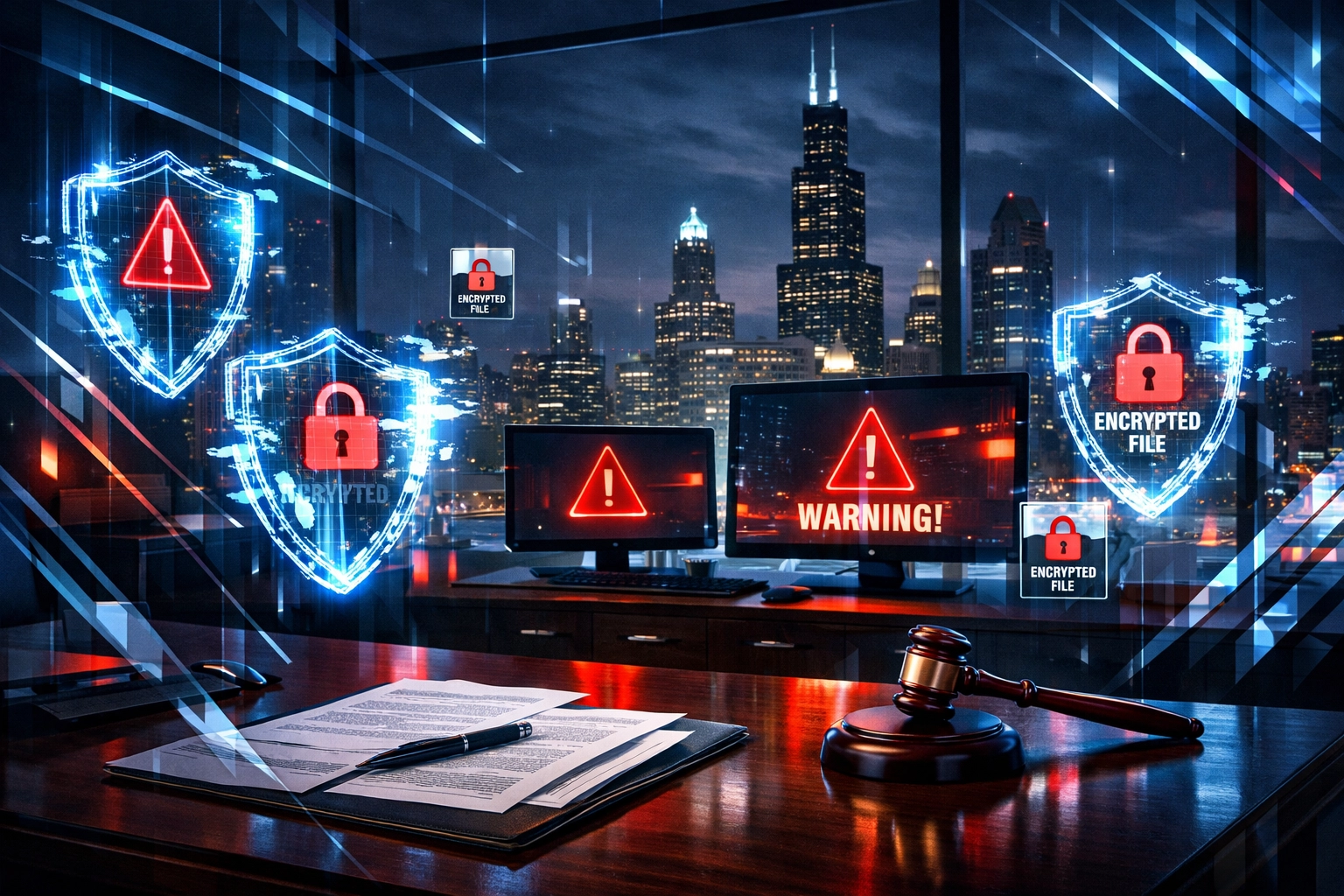
The Real Cost of "Winging It" with IT
Let's talk numbers. When ransomware hits, here's what you're actually paying for:
The ransom itself: $50,000 to $500,000+, depending on your firm's size and how desperate they think you are.
Emergency IT response: Most break-fix IT companies charge $200-400 per hour. A serious incident requires multiple engineers working around the clock. That's easily $20,000-50,000 before you've recovered a single file.
Downtime costs: Your associates bill $300-500 per hour. When they can't access case files for three days, you're burning through tens of thousands in lost billable hours: money you can't get back.
Client liability exposure: Did the breach expose privileged communications? Discovery materials? Settlement negotiations? Your malpractice insurance likely won't cover data breach liability, especially if you failed to implement reasonable security measures per ABA guidelines.
Reputation damage: One breach makes the local legal news. Partners at other firms remember. Clients google your firm name and see "data breach" in the results. Good luck landing that Fortune 500 corporate client now.
Here's the kicker: even if you pay the ransom, there's no guarantee you'll get your files back. About 40% of firms that pay ransoms never fully recover their data or experience repeat attacks within months.
Three Ways Chicago Law Firms Actually Protect Themselves
The firms that don't end up in crisis mode do three things differently. Not ten things. Not a complete IT overhaul. Three specific moves that eliminate 95% of your risk:
1. They monitor 24/7, not just 9-to-5.
Most security breaches happen at 2 AM on Sunday. If your IT "support" is just a guy you call when something breaks, nobody's watching when hackers are most active. Real protection means continuous monitoring that catches threats before they execute: not after your files are already encrypted. At GCMSP, 24/7 monitoring is standard because cybercriminals don't keep business hours.
2. They treat IT like infrastructure, not overhead.
The firms that survive breaches without catastrophic damage have something in common: they work with IT providers who understand legal workflows, compliance requirements, and what "court-ready" actually means. They're not just keeping the lights on: they're strategically planning for disaster recovery with law-specific SLAs. When 95% of issues get resolved in under an hour, missed deadlines become a non-issue.
3. They get strategic IT guidance, not just troubleshooting.
Partners make seven-figure decisions about case strategy but wing it on cybersecurity because "that's IT's problem." Top firms bring in Fractional CIO services to pressure-test their security posture, ensure ABA compliance, and align technology spending with firm growth. It's like having a technology partner at the table: without the partner-level salary.
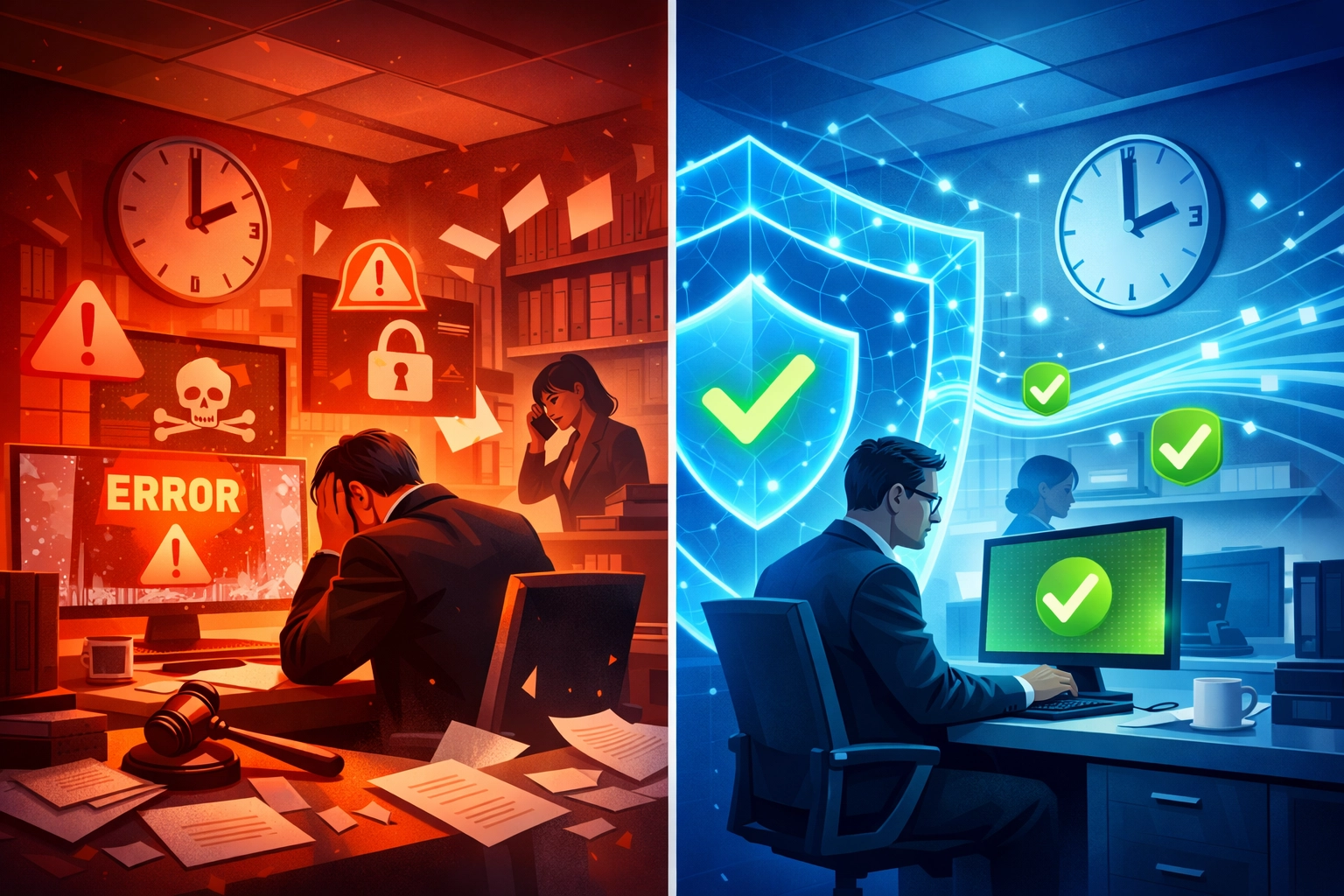
What Happens When Your IT Provider Knows Legal
Here's where most Chicago law firms get burned: they hire IT companies that treat them like any other small business. But you're not a small business. You've got:
Ethical obligations around client confidentiality that go beyond HIPAA
Discovery requirements that demand specific data retention protocols
Document management systems that need to integrate with court e-filing
Remote access needs for attorneys working from courtrooms, home offices, and client sites
When something breaks at 4:30 PM the day before a filing deadline, you need someone who answers the phone: not a ticket system that promises "we'll get back to you within 24 hours." You need a provider who understands that "restore from backup" isn't good enough if those backups don't meet legal hold requirements.
Local responsiveness matters. Chicago-based firms need Chicago-based IT support that can be on-site when Zoom calls won't cut it. The legal industry moves too fast for providers who treat you like ticket number 47 in the queue.
The Bigger Picture
IT security for law firms isn't just about avoiding ransomware: it's about protecting the trust clients place in you when they share their most sensitive information. When you sign a client, you're implicitly promising that their privileged communications won't end up in the wrong hands because you didn't patch your servers.
One breach doesn't just cost money. It costs your reputation in a profession where reputation is everything.

Your Takeaway
Block off 30 minutes this week to audit your current IT setup. Ask yourself three questions:
If ransomware hit tomorrow morning, how long would it take to get back online?
Who's monitoring our systems at 3 AM when hackers are most active?
Does our IT provider understand the specific compliance requirements for law firms?
If you can't confidently answer all three, you're self-insuring against unlimited liability exposure, and that's significantly more expensive than any malpractice policy.
Want to see how your firm stacks up against other Chicago law practices? We'll run a free security assessment that shows you exactly where your vulnerabilities are and what it would actually cost to fix them: before it becomes a crisis.
Check out our specialized IT support for Chicago law firms or let's have a conversation about what proactive protection actually looks like for your practice.
The only thing more expensive than good IT security is recovering from bad IT security. And unlike malpractice claims, cybersecurity incidents don't have coverage limits: the costs just keep climbing until you've fixed the problem.


Comments